From "Too Small to Read" to Strategic Insights: How L’Oréal Is Surveying the Un-Surveyable

When niche consumers stop being invisible
1 min read
<100 → readable
niche brand and sub-range segments unlocked
~3× boost on small segments
on rare skincare and beauty audiences
6 blind spots → full visibility
across CeraVe and La Roche-Posay niches

Play video
How L’Oréal Used Synthetic Data to Turn Small Samples into Actionable Insights
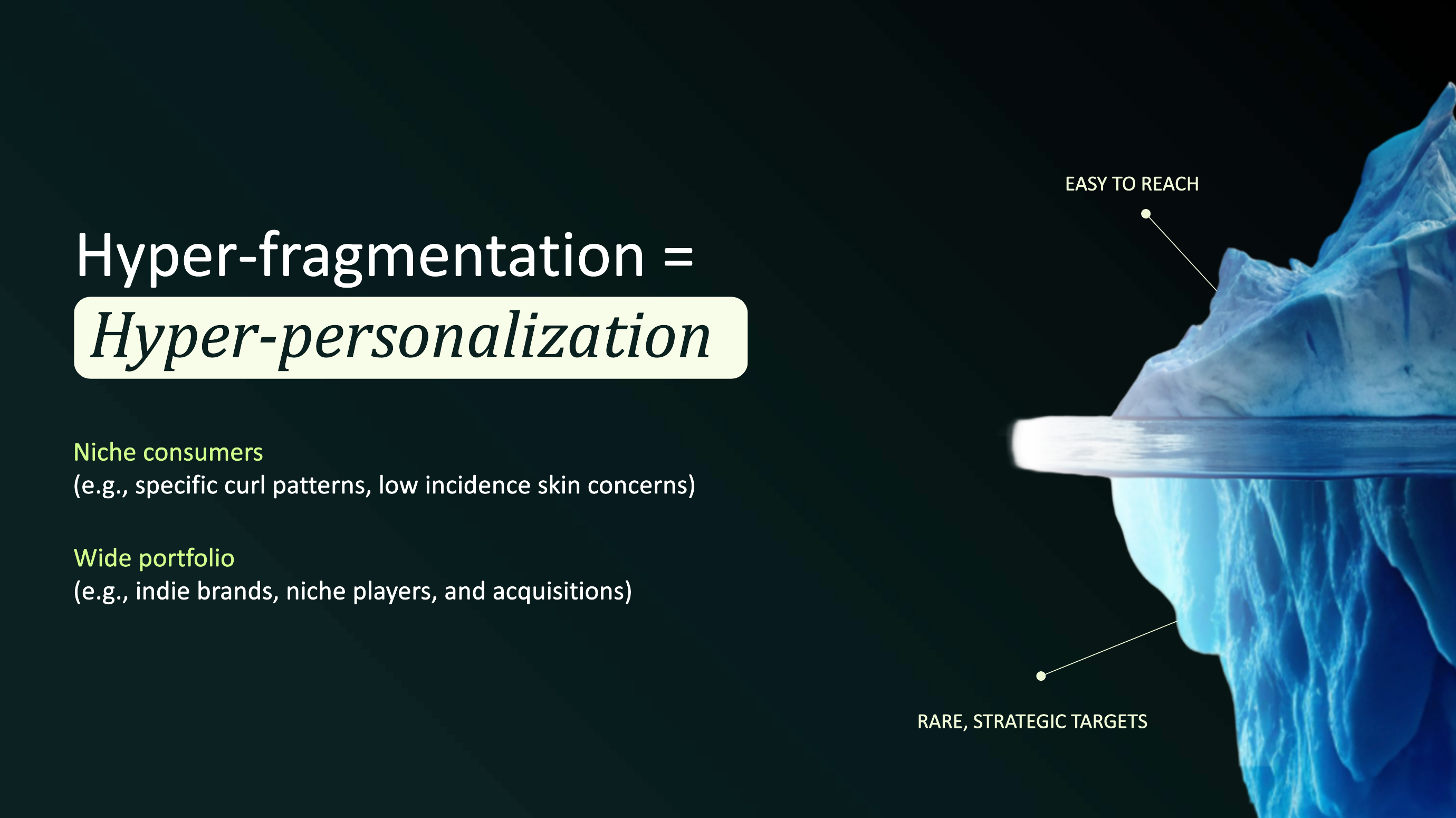
Every insights team has felt the frustration. You’ve run the survey, collected the data, but the most critical audiences—the niche product users, the emerging trendsetters, the customers who represent the future of your market—are hidden in sample sizes labeled “too small to read.”
It’s a problem that plagued even a global leader like L’Oréal. With a portfolio of 37 brands, understanding these rare but strategic audiences was not just a priority; it was essential for growth. As Nadia Obukhova, Global Consumer & Market Insights Manager at L’Oréal, puts it, “We had a problem that we couldn’t solve without new technologies.”
This is the story of how L’Oréal, in a groundbreaking collaboration with IFOP and Fairgen, stopped seeing small samples as a roadblock and started seeing them as an opportunity. It’s a story about how they found a way to make the data they already trusted go further, turning impossible studies into everyday reality.
The “Aha!” Moment: Expanding What You Already Have
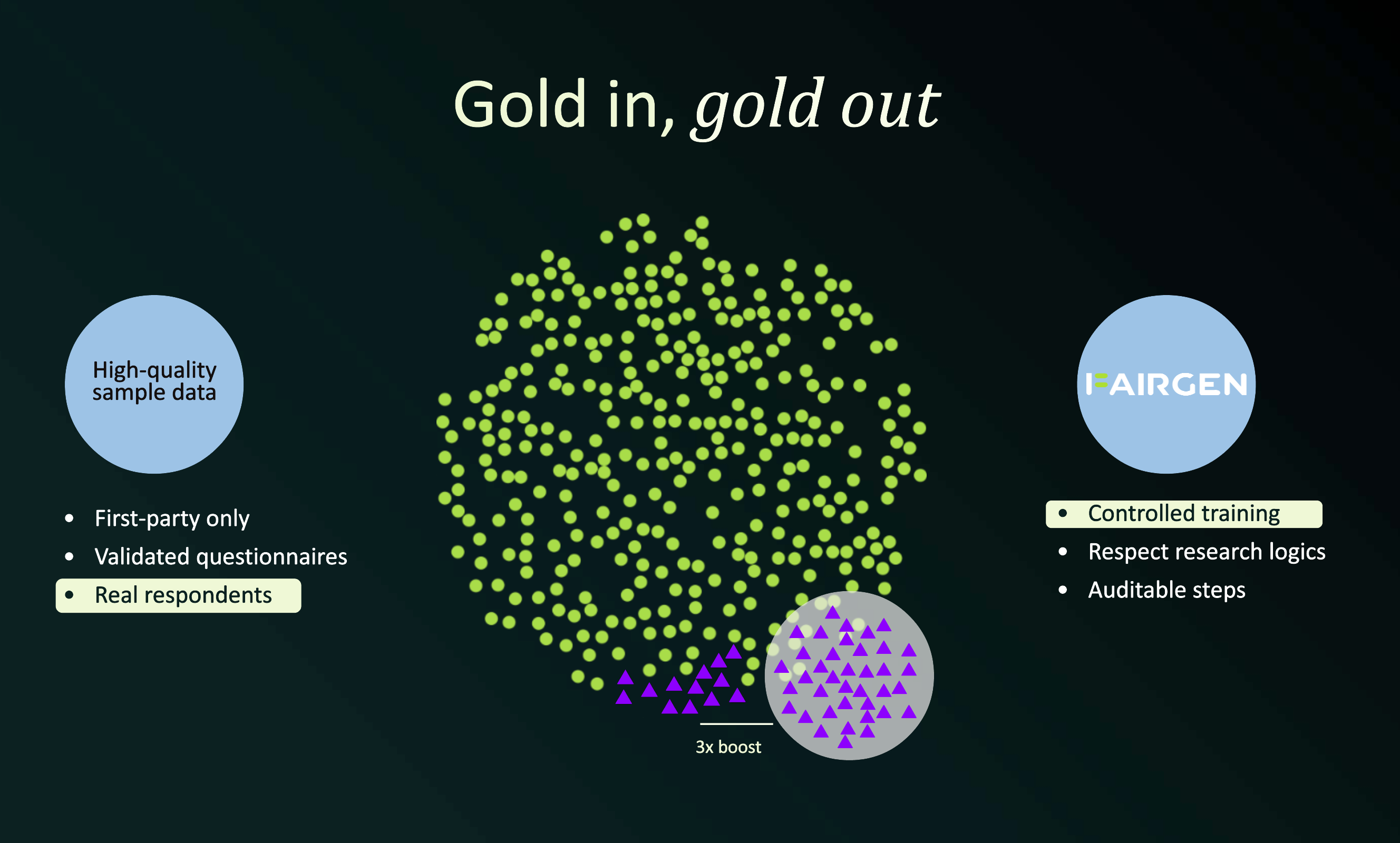
The breakthrough wasn’t about replacing trusted research methods; it was about enhancing them. L’Oréal’s insight teams had high-quality, first-party survey data. The problem wasn’t the data’s quality; it was the quantity in the segments that mattered most.
The solution was a simple yet powerful idea: what if you could “boost” just those small segments without disrupting your entire research process?
Here’s how the straightforward, four-step process works:
1. Upload Your Data: The team begins by uploading their completed, validated survey data on Fairgen's self-serve platform.
2. Flag the Gaps: They identify the under-represented segments they need to understand better.
3. Boost the Segments: Fairgen’s models, trained only on L’Oréal’s own first-party data, generate statistically representative synthetic respondents to enlarge just those specific groups.
4. Analyze with Confidence: The boosted dataset, now with robust sample sizes in the key segments, is ready for analysis using L’Oréal’s existing workflows and tools.
For the insights team, the process felt seamless. The questionnaires, fieldwork, and analysis frameworks all stayed the same. The only difference? Those once-unreliable segments were now stable, robust, and ready for deep analysis. It was the same data, just more powerful.
The Journey: Building Trust, One Use Case at a Time
L’Oréal didn’t just flip a switch. They built confidence through a methodical, three-phase journey, with rigorous validation at each step.
Phase 1: The Garnier Test - “Can This Really Work?”
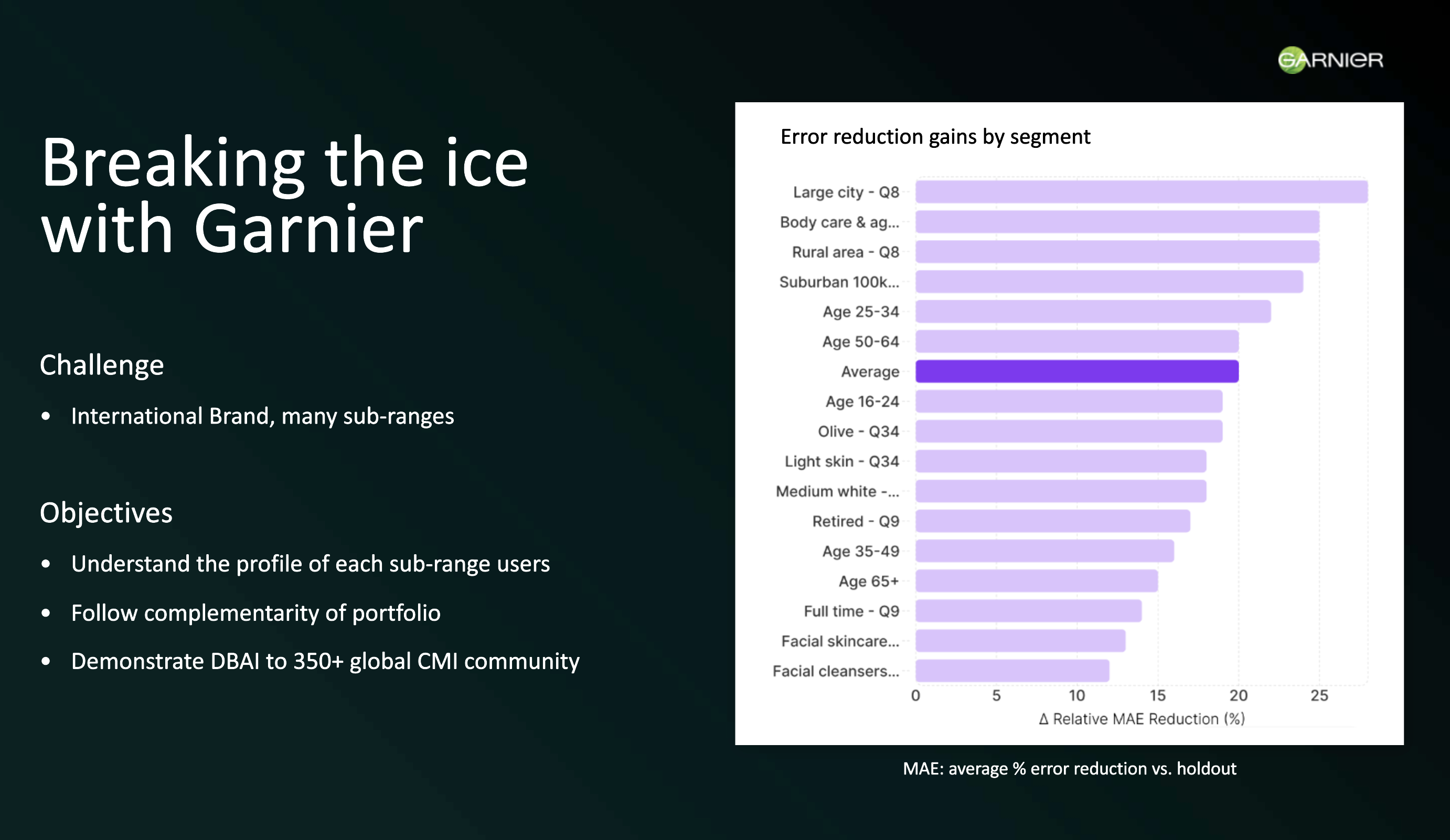
The first pilot was a Garnier multi-market profiling study. The challenge was classic: many of the brand’s sub-ranges had too few respondents for reliable analysis. The team used Fairgen to boost these small segments and compared the results to traditional methods.
The results were undeniable. The boosted data achieved 84% alignment on shared KPIs and delivered 20% lower error than the original small samples. It was the proof they needed: synthetic augmentation could mirror reality with stunning precision.
Phase 2: The PowerUp Project - “How Far Can We Push This?”
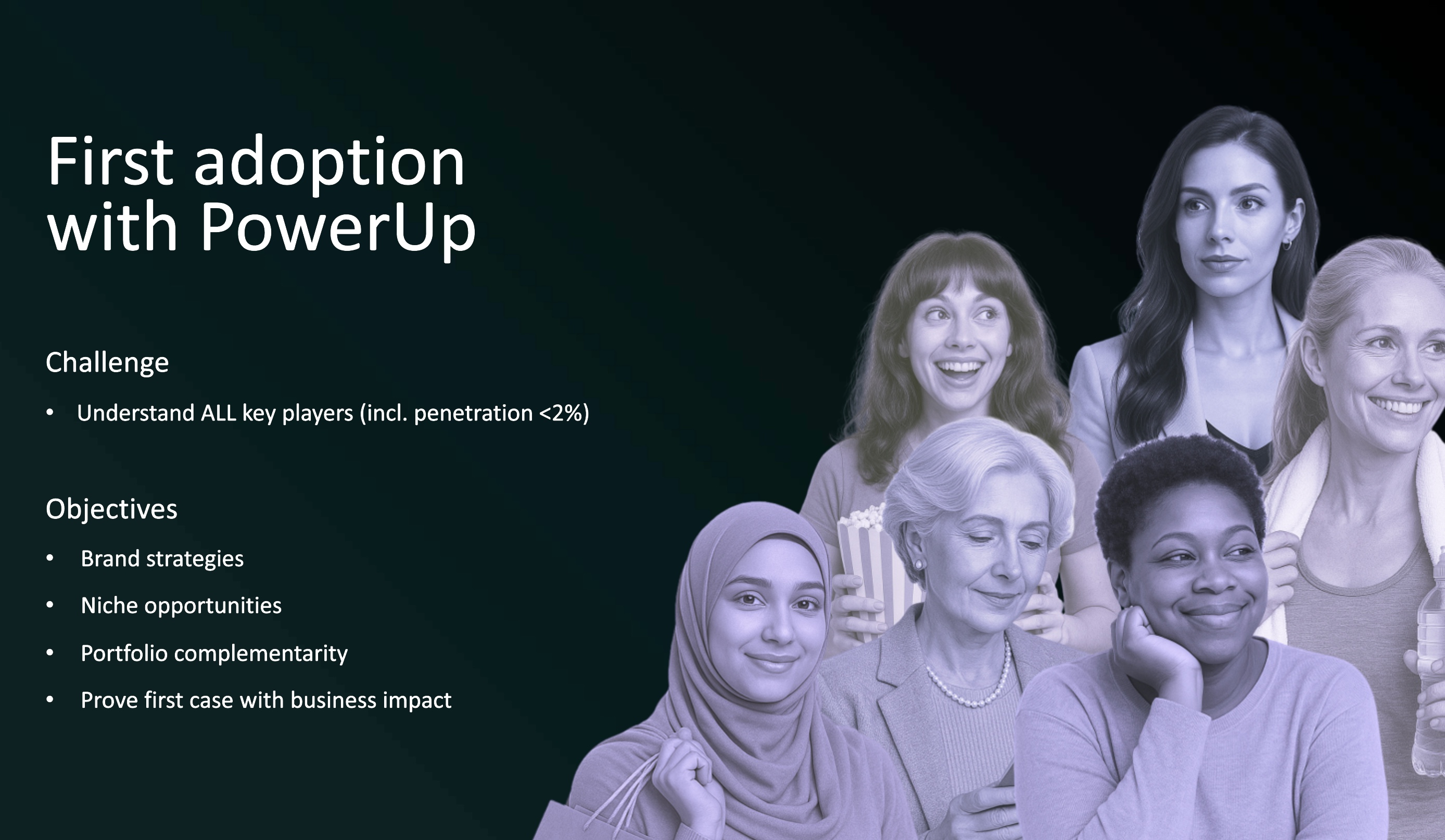
With confidence from the Garnier test, the team tackled a bigger challenge: a national segmentation study where several strategic brands had a market share below 2%. These brands were statistically invisible, a blind spot in L’Oréal’s competitive intelligence.
By applying Fairgen’s boosting technology, the team restored visibility for 15 low-incidence brands. For the first time, L’Oréal had a complete, reliable view of the entire competitive landscape, all without adding a single new respondent or dollar to their fieldwork budget.
Phase 3: U.S. Skincare - “Is This Ready for Prime Time?”
The final test was the ultimate gauntlet: a continuous facial-cleanser benchmarking study, one of L’Oréal’s most demanding quantitative programs. Could the hybrid approach match the accuracy of a full-sample dataset?
In holdout comparisons, the boosted data preserved around 90% of significant relationships across key dimensions, showing that the structure of the real data was maintained. In the same program, a separate alignment check reported 95.3% agreement at a 99% confidence level. Together, these results confirmed that the method is scientifically rigorous and ready for large-scale use.

From a Promising Test to a Global Toolbox
With a three successful validations, the approach moved from a promising pilot to a core methodology. L’Oréal developed clear guidelines, and hybrid quant became an indispensable part of the company’s global insights framework.
Today, it supports segmentation, benchmarking, and profiling studies across divisions and markets. But more importantly, it has changed the way the insights team approaches their work.
“It helps us to look at the niche targets tomorrow,” Nadia explains. “It will help us to reduce our questionnaires and step by step open new opportunities to better understand our consumers.”
This transformation was driven by a unique collaboration. L’Oréal brought the real-world business challenges, IFOP ensured unwavering methodological rigor, and Fairgen delivered the transparent AI engine that made it all possible. Together, they proved that the future of research is not about replacing human insight but augmenting it.
Watch the Full Story
Hear Nadia Obukhova share the journey from skepticism to scale in her own words.
See how Fairgen’s boosting technology is helping the world’s largest beauty group get closer to the consumers who will shape the future of the industry.
.png)
Curious about synthetic boosting?
Let's talk
Explore more stories


Ready to trust your data again?
Contact us

